Understanding your menstrual cycle can make it easier to recognize changes in your body and identify the days when conception may be more likely. While many people rely on calendar estimates, cycles can vary from month to month, which means that predicted fertile days are not always exact.
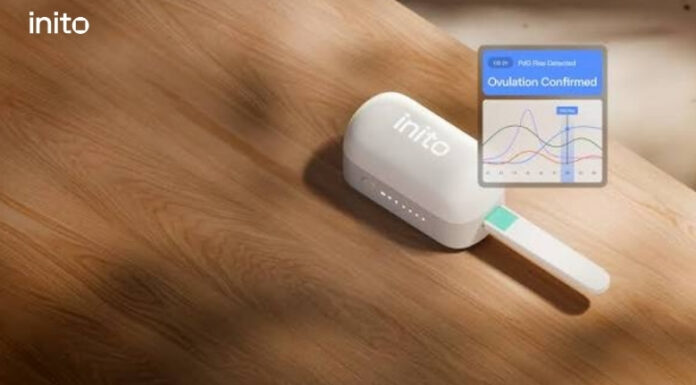
Modern fertility tracking tools can provide additional information by helping users monitor hormone changes throughout the cycle. Inito is designed to help users track fertility hormones at home and understand patterns associated with the fertile window.
Why Understanding Your Cycle Matters
Every menstrual cycle is different, and even someone with a generally regular cycle may experience changes from one month to another. Stress, travel, sleep, illness, lifestyle changes, and other factors can affect cycle timing.
The menstrual cycle involves several hormonal changes that influence ovulation and prepare the body for a possible pregnancy. Understanding these changes can give you a clearer picture of what is happening throughout the month.
Inito focuses on hormone-based fertility tracking, helping users monitor changes rather than relying exclusively on an estimated calendar date.
Traditional calendar tracking can be useful as a starting point, especially if your cycles are consistent. However, it generally predicts fertile days based on previous cycle patterns rather than measuring what is happening during the current cycle.
Hormone tracking can provide another layer of information.
Learning about your cycle can also help you communicate more effectively with a healthcare professional if you have questions about irregular periods, ovulation, or conception.
It is important to remember that fertility tracking is not a guarantee of pregnancy or a substitute for medical advice.
Instead, it can be a useful way to become more familiar with your individual cycle.
The more consistently you observe your cycle, the easier it may become to recognize patterns that are unique to you.
Learn About the Hormones Involved in Ovulation
Hormones play a central role in the menstrual cycle. Several hormones change at different stages, and understanding their general functions can make fertility tracking easier to understand.
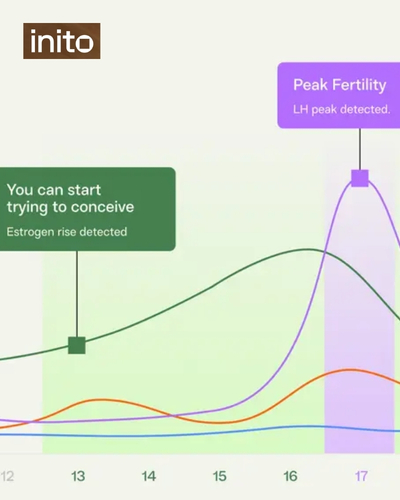
Luteinizing hormone, commonly known as LH, rises around ovulation. This increase is often used as an indicator that ovulation may be approaching.
Estrogen also changes during the cycle and can rise before ovulation. Progesterone becomes particularly important after ovulation and is associated with the luteal phase.
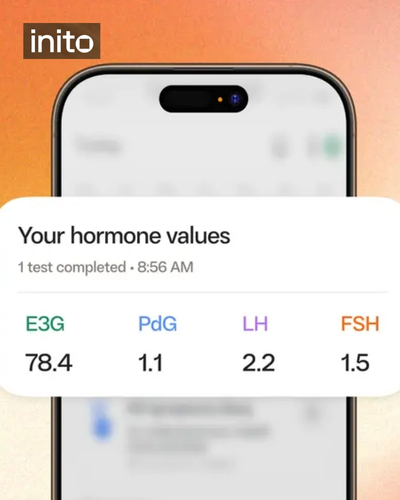
Inito tracks multiple fertility-related hormones, including estrogen, LH, progesterone metabolite, and follicle-stimulating hormone, depending on the testing system and cycle information being monitored.
Tracking more than one hormone can provide a broader picture than simply looking for a single LH surge.
For someone trying to understand their fertile window, observing hormonal changes over several days may be more informative than checking one isolated result.
However, hormone patterns can vary considerably between individuals.
Some people may experience clear hormonal changes, while others may have less predictable patterns.
This is why fertility tracking should be viewed as a process rather than a single test.
Understanding what each hormone generally represents can also make the results easier to interpret.
If your results consistently seem unusual or you have concerns about ovulation, discussing them with a qualified healthcare professional is appropriate.
Understand the Fertile Window
The fertile window refers to the period during the menstrual cycle when pregnancy is more likely to occur. It is closely connected with the timing of ovulation.
One common misconception is that there is only one fertile day. In reality, the fertile window includes several days surrounding ovulation because sperm can survive in the reproductive tract for a period of time.
Inito is designed to help users identify hormonal changes associated with the fertile window by monitoring fertility hormones at home.
This can be particularly useful for people who want information based on their current cycle rather than relying entirely on an average cycle length.
Calendar-based predictions may work reasonably well for some people, but they become less reliable when cycles are irregular.
For example, someone who normally has a 28-day cycle may occasionally ovulate earlier or later than expected.
Tracking hormonal changes can help provide additional context when cycle timing changes.
If you are trying to conceive, understanding the fertile window can help you plan intercourse around the days when conception is more likely.
If you are not trying to conceive, fertility awareness requires careful and consistent tracking, and hormone testing alone should not automatically be treated as a contraceptive method.
The most important point is to understand that fertility varies from person to person.
Your own cycle patterns are more useful than assumptions based solely on an average menstrual cycle.
Make Fertility Tracking Part of Your Routine
Consistency is one of the most important parts of fertility tracking. Testing occasionally may provide limited information, while following a regular routine can make patterns easier to recognize.
Many people find it useful to test at approximately the same time each day and record their results throughout the cycle.
Inito is designed for at-home testing, allowing users to monitor fertility hormones using urine samples and view their results through a connected digital experience.
Creating a simple routine can make tracking less complicated.
Keep the testing materials somewhere convenient, choose a consistent time, and record relevant cycle information.
You can also note other observations, such as the first day of your period or changes in cervical mucus.
These details may provide additional context when looking at your cycle.
The goal is not to become overwhelmed by numbers.
Instead, focus on identifying meaningful patterns.
Some cycles may look different from others, and that does not automatically indicate a problem.
If you frequently notice significant changes, prolonged irregularity, or other concerns, consider discussing them with a healthcare professional.
A tracking routine should support your understanding of your body rather than create unnecessary anxiety.
The simpler the process feels, the easier it is to maintain consistently.
Use Fertility Data to Have Better Conversations
One advantage of tracking your cycle is having concrete information that you can refer to when discussing fertility with a healthcare professional.
Instead of remembering only that your period was “late” or that ovulation seemed unusual, you may have several weeks or months of observations to discuss.
Inito can provide users with hormone measurements and cycle information that may help them understand their individual patterns.
This information can be useful when asking questions about cycle timing or possible ovulation patterns.
However, at-home fertility tracking should not be used to diagnose medical conditions.
There are many possible reasons for irregular cycles or difficulties conceiving, and interpreting fertility data requires appropriate medical context.
If you have been trying to conceive without success, experiencing unusually irregular cycles, or noticing other reproductive health concerns, a healthcare professional can help determine whether further evaluation is appropriate.
Tracking can make these conversations more organized.
You can bring your cycle history, test results, and observations to an appointment.
This may help create a more complete picture of what has been happening over time.
It is also useful to remember that one unusual cycle does not necessarily explain your overall fertility.
Looking at patterns over time is generally more meaningful than focusing on a single result.
Use your data as a tool for communication and awareness rather than attempting to make a diagnosis yourself.
Know What Fertility Tracking Can and Cannot Tell You
Fertility tracking can provide valuable information, but it also has limitations. Understanding these limitations is essential for using any fertility technology responsibly.
Hormone measurements can indicate changes associated with different stages of the cycle, but they cannot guarantee that ovulation has occurred in every situation.
Similarly, identifying a fertile window does not guarantee conception.
Inito provides hormone tracking information intended to help users understand their fertility patterns, but individual results should always be interpreted within the broader context of personal health and cycle history.
Several factors can influence fertility, including age, reproductive health, sperm health, medical conditions, medications, and lifestyle.
This means that fertility is much more complicated than identifying a single hormone surge.
Tracking can nevertheless be valuable because it encourages greater awareness.
You may begin to recognize how your cycle changes over time and identify patterns you were previously unaware of.
If your results repeatedly appear inconsistent with your expected cycle or you have concerns about fertility, professional guidance is important.
Technology can provide information, but it does not replace individualized medical care.
The most useful approach is to combine tracking with general knowledge about reproductive health and appropriate professional support when needed.
Understanding your menstrual cycle is an important step toward becoming more informed about your reproductive health. Rather than relying entirely on calendar predictions, hormone-based tracking can provide additional information about changes that occur during the cycle.
Inito offers an at-home approach to monitoring fertility-related hormones, helping users observe patterns associated with the fertile window and different stages of the menstrual cycle.
The key is to approach fertility tracking as a learning process.
Start by understanding the basics of your cycle and the role of hormones such as estrogen, LH, progesterone, and follicle-stimulating hormone.
Then develop a consistent testing routine so that you can compare results across different days.
Pay attention to your individual patterns rather than assuming that your cycle will always follow an average calendar.
If you are trying to conceive, understanding the fertile window may help you plan more effectively. If you are monitoring your cycle for general awareness, consistent tracking can help you become more familiar with changes throughout the month.
At the same time, remember that fertility tracking has limitations. Hormone measurements cannot guarantee ovulation or pregnancy, and they should not be treated as a diagnosis.
If you have concerns about irregular cycles, ovulation, or difficulty conceiving, consult a qualified healthcare professional.
The greatest benefit of fertility tracking is awareness. By collecting information consistently and understanding what it means, you can become more informed about your own cycle and have more meaningful conversations about reproductive health when professional support is needed.
With realistic expectations and consistent tracking, fertility data can become a useful part of understanding your body and making informed decisions about your reproductive journey.