

1. Introduction: Trainline as a Modern Travel Essential
In a world where mobility is becoming increasingly digital, Trainline stands out as one of the most influential travel-tech platforms in Europe. What was once a simple website for purchasing UK rail tickets has transformed into a comprehensive tool that connects millions of travelers with rail and coach services across numerous countries. Trainline is built on a promise of convenience: eliminating the hassles traditionally associated with train travel and replacing them with smart technology, intuitive design, and real-time information. Today, both daily commuters and international explorers rely on Trainline to simplify journeys, optimize routes, and save money. Its growth reflects a larger shift toward sustainable, accessible, and tech-driven transportation.
2. How Trainline Began: From Local Tool to International Platform
Trainline was founded in 1997, a time when online ticket purchasing was not yet mainstream. In the early days, the company focused solely on helping UK passengers book rail tickets without waiting in line or dealing with complex fare rules. The idea was innovative: provide a digital platform that unified train schedules, ticket options, and prices from multiple operators—something unheard of at the time.
As Trainline grew, so did the expectations of travelers. With digital adoption rising, users wanted broader access to routes, faster updates, and smarter features. Trainline responded by expanding its network of partnerships and investing in data-driven infrastructure. The platform eventually integrated with leading European rail providers such as Renfe, SNCF, Deutsche Bahn, ÖBB, and Trenitalia. This step marked Trainline’s evolution from a national ticketing tool to a truly international travel companion.
Today, Trainline supports millions of journeys each year and functions as a bridge between travelers and a fragmented European rail system. By translating schedules, pricing models, and booking rules into a unified experience, it has removed barriers for both local passengers and international travelers navigating foreign networks.
3. What Makes Trainline Unique: Key Features That Enhance Every Journey
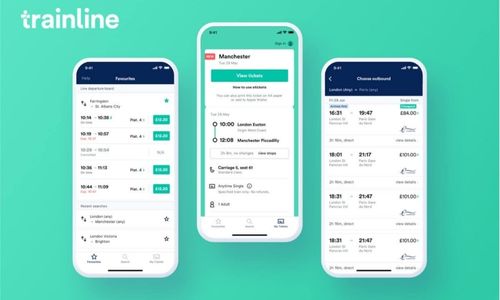
Trainline’s popularity is driven by its commitment to user-friendly design and intelligent features that reduce stress and uncertainty. Its value lies not just in selling tickets but in optimizing the entire travel experience. Some standout features include:
• Comprehensive real-time updates
Trainline collects live data from rail operators, providing immediate information about delays, cancellations, and platform changes. This real-time accuracy allows travelers to adjust plans quickly, avoid missed connections, and stay informed even during unexpected disruptions.
• Mobile tickets and digital convenience
Gone are the days of printing tickets or keeping track of paper stubs. Trainline’s digital ticketing system is fast, secure, and accessible offline. For travelers on the move—especially those navigating foreign stations—this simplicity makes a world of difference.
• Intelligent price predictions
Trainline’s algorithm predicts fare fluctuations, helping users identify the best time to book. This feature saves travelers considerable money, especially on popular or long-distance routes where demand affects ticket costs. Fare alerts ensure users never miss a price drop.
• Multi-operator and multi-country booking
European rail travel can be complex due to diverse operators, languages, and rules. Trainline consolidates them into one platform, making cross-border itineraries as easy as booking a local commuter train.
• Flexible management of bookings
Plans change—and Trainline makes adjusting them straightforward. From refund processing to seat selection adjustments and alternative route suggestions, the platform minimizes the frustration associated with traditional ticketing systems.
• Environmental impact insights
Trainline highlights the eco-benefits of choosing trains over flights or cars, displaying estimated CO₂ savings for each journey. These insights resonate with travelers who prioritize sustainability or want to reduce their carbon footprint.
These features don’t just make the platform convenient—they position Trainline as an essential tool for modern, conscious, and tech-savvy travelers.
4. Trainline’s Impact on European Travel and Sustainability
Trainline has played a pivotal role in shaping the way people move across Europe. One of its most significant contributions is democratizing access to rail travel. Before platforms like Trainline, travelers faced language barriers, complicated fare structures, and inconsistent booking systems. Trainline’s unified approach empowers people from any country to book trips confidently, whether they are planning a quick weekend getaway or a multi-stop European tour.
The platform also encourages more environmentally friendly travel. Rail is widely recognized as one of the greenest modes of transportation, producing far fewer emissions than flying or driving. By making rail easier to navigate, Trainline naturally promotes sustainability. The company often highlights how train travel reduces congestion, improves urban mobility, and supports broader climate goals—messaging that aligns with global environmental initiatives.
In addition, Trainline stimulates tourism and economic growth by improving access to smaller towns and regional routes. Many travelers use the platform to explore destinations that might otherwise be overlooked. This helps local communities and supports distributed tourism—a trend increasingly encouraged by European travel organizations.
Finally, Trainline pushes rail operators toward modernization. As travelers demand transparency, fast digital tools, and cross-border flexibility, operators invest in better technology, improved mobile solutions, and streamlined customer service. In this way, Trainline acts as both a market leader and a catalyst for positive industry-wide change.
5. Challenges for Trainline: Competition, User Expectations, and Technical Complexity
Despite its many advantages, Trainline faces significant challenges as it continues to grow. The travel-tech market is becoming increasingly competitive, with national rail operators strengthening their own digital platforms, and international companies exploring AI-based travel engines. Standing out requires continuous innovation and flawless user experiences.
Another challenge is managing the complexity of Europe’s diverse rail ecosystems. Each country has its own fare structures, ticket rules, reservation systems, and regulatory requirements. Trainline must constantly adapt its platform to reflect changing policies, updated schedules, and local travel reforms. This involves intense coordination with dozens of rail providers and government authorities.
User expectations also pose a challenge. Travelers now expect highly personalized experiences—custom itinerary suggestions, seamless multi-modal integrations, and intelligent AI assistants. Maintaining fast load times, accurate data, and intuitive design is essential for Trainline to remain competitive.
Additionally, real-time data accuracy is a major operational hurdle. With traffic across Europe’s rail networks in constant motion, delivering timely updates on disruptions requires enormous technical precision and robust infrastructure.
However, Trainline’s proactive investments in technology, partnerships, and data systems suggest that the company is well-equipped to navigate these challenges and continue leading the market.
6. The Future of Trainline: Innovation, AI, and Expanding Mobility
The future of Trainline is likely to be shaped by new technologies and an increasing global emphasis on sustainable travel. Artificial intelligence will play a major role, enabling smarter route predictions, automated travel planning, improved customer support, and more accurate fare forecasting. AI-driven personalization could help Trainline recommend ideal travel options based on user habits, budget, timing, and environmental goals.
Trainline may also expand its focus beyond trains and coaches to integrate additional modes of transportation. As cities embrace multi-modal mobility—combining trains, trams, bikes, buses, and ride-sharing—Trainline could evolve into a complete mobility hub. This would allow travelers to plan entire door-to-door journeys within a single platform, not just rail segments.
Sustainability will likely remain a cornerstone of Trainline’s innovation. Europe continues to invest heavily in rail infrastructure, low-emission networks, and climate-friendly mobility. Trainline can support these efforts by highlighting eco-friendly travel options, providing carbon comparison tools, and encouraging green choices.
Finally, international expansion is a significant opportunity. Many regions around the world lack consolidated rail booking platforms. By leveraging its existing technology and experience, Trainline could extend its model to new markets, broadening its global footprint and redefining digital mobility far beyond Europe.
Conclusion
Trainline has transformed the way people discover, book, and experience rail and coach travel across Europe. Through smart technology, intuitive design, and a commitment to sustainability, it has become an indispensable tool for millions of travelers. As transportation evolves, Trainline is poised to shape the future of mobility with innovations in AI, international expansion, and integrated travel solutions. Whether for daily commuting or cross-continental exploration, Trainline continues to redefine what convenient, modern, and eco-conscious travel can look like.